
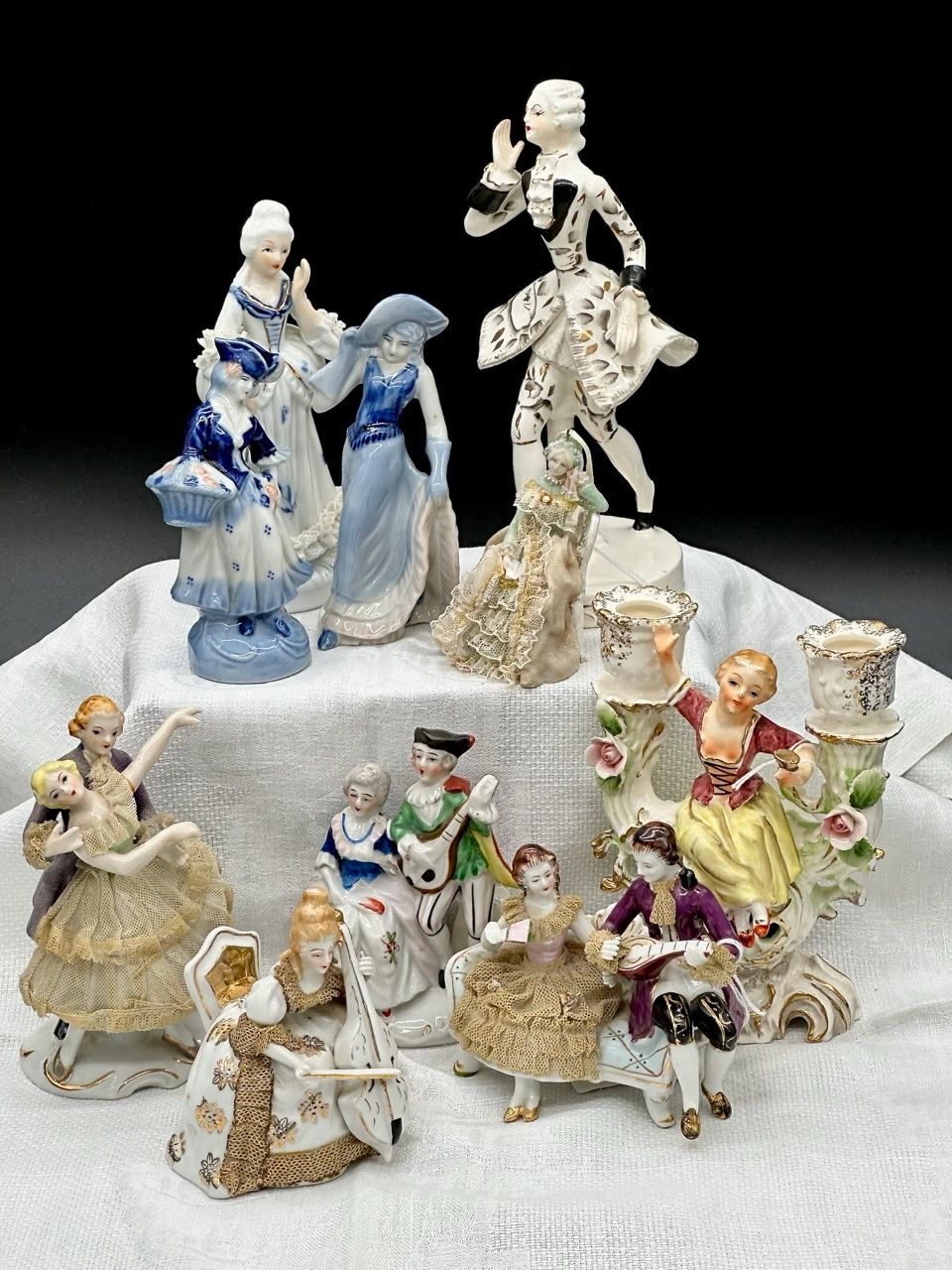
At first glance, these delicate porcelain figures appear to have stepped right out of a European ballroom—lace-trimmed gowns swirling mid-waltz, powdered wigs perched jauntily, and musicians strumming lutes beneath candlelight. But turn one over, and you might find a mark that tells a very different story: “Made in Occupied Japan.”
Between 1945 and 1952, during the Allied occupation of Japan following World War II, the phrase “Occupied Japan” was required on exported goods. This short period yielded a unique and deeply symbolic wave of craftsmanship, where Japanese artisans created pieces for Western markets under the eye of foreign powers. These figurines, now found in our collection at Pollyanna’s Antiques, are relics of that moment—a time of economic rebuilding, cultural adaptation, and artistic resilience.
What makes them especially fascinating is their subject matter. Here are figures dressed in distinctly Western garb—Marie Antoinette-style dresses, 18th-century court musicians, waltzing couples in ballet-like motion. They aren’t portrayals of Japanese culture, but interpretations of what Western buyers longed for: romance, nostalgia, and elegance. It’s history in reverse—a culture thousands of years old, handcrafting images of someone else’s past.
There’s a quiet irony and beauty in that. While Japan was looking toward modernization and recovery, its artists were meticulously recreating scenes from Europe’s Rococo and Victorian eras—an imaginative echo of time and place. These figurines aren’t just lovely—they’re layered. They represent how art can transcend borders, even during times of hardship.
For collectors, the “Occupied Japan” stamp adds a layer of significance. These items mark a rare historical window that closed more than 70 years ago. For all their delicacy, they are surprisingly resilient—tiny, frozen vignettes of old-world charm, shaped during one of the most transformative periods of the 20th century.
Whether you’re drawn by the craftsmanship, the history, or the charm of a ballerina mid-spin, we invite you to explore these pieces in person. At Pollyanna’s Antiques in Mt. Clemens, each figurine has a quiet voice—and if you listen closely, it has quite a story to tell.