
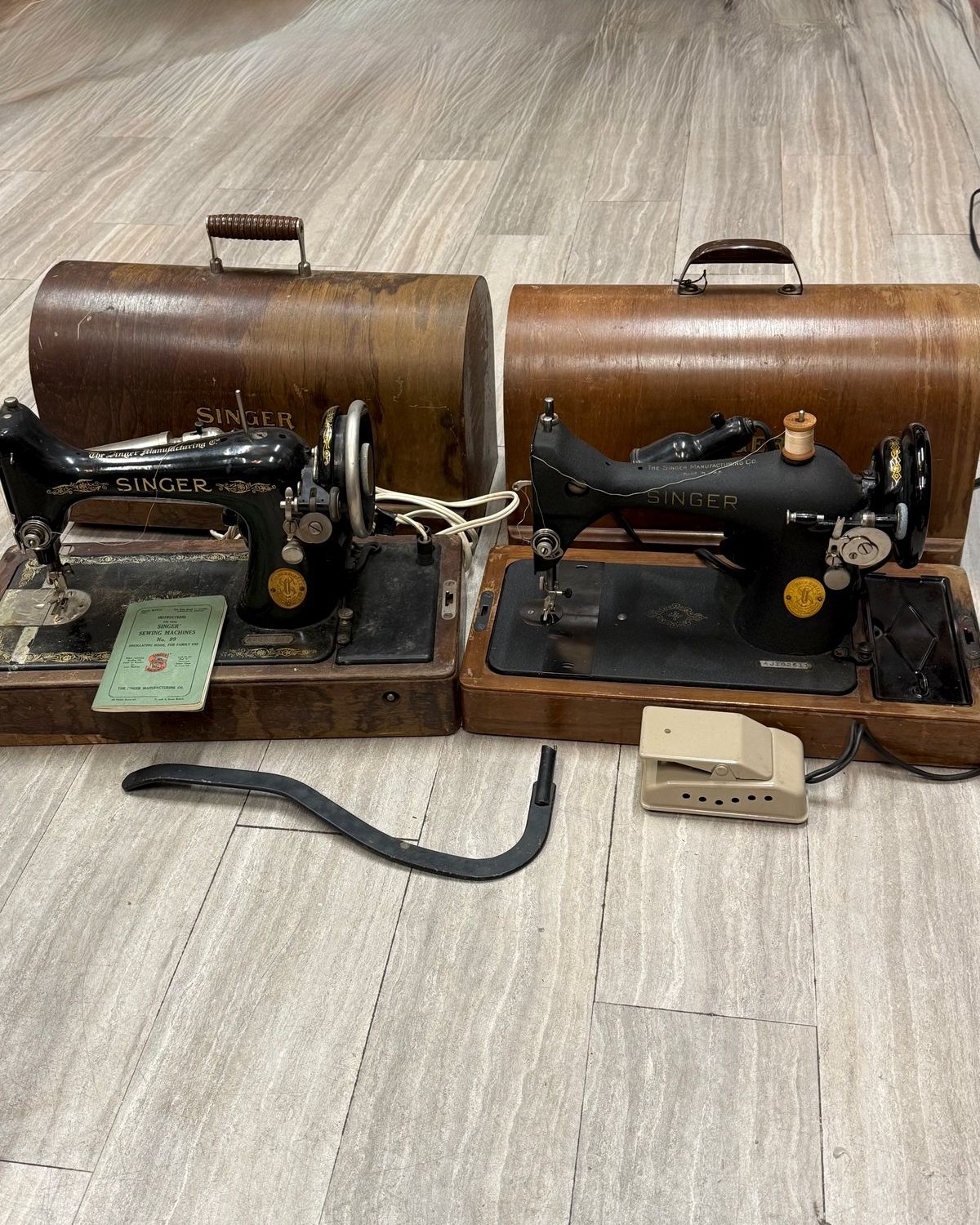
Two black-and-gold Singers sit side by side, each resting in front of its own domed wooden case, like a matched pair of old friends who have seen a great deal of mending between them. One dates to 1927, the other to 1949, more than twenty years apart, yet both carry the same handsome scrollwork and the famous gilded SINGER name across the arm.
The machine on the left, from 1927, comes wonderfully complete. It still has its original instruction book, its bentwood cover to keep the dust away, and its knee bar, the curved lever that let a seamstress control her stitching speed with a press of the knee, leaving both hands free to guide the fabric. Little touches like these are what collectors hope to find and so rarely do.
Its companion on the right, from 1949, is just as charming and just as well kept. It arrives with its own bentwood cover and a foot pedal controller, the design that became the standard as electric sewing made its way into homes across the country. The gold decals still shimmer against the deep black japanned finish.
For generations, a Singer was the heart of the household sewing room, stitching everything from Sunday dresses to quilts to school clothes. Machines like these were built to last a lifetime and then some, and they have. Whether you sew, collect, or simply love the look of beautiful old ironwork, this pair brings a wonderful dose of history and craftsmanship.
Come see both Singers in person at Pollyanna’s Antiques in downtown Mt. Clemens. We are open Wednesday, Friday, and Saturday from 10 to 4, and these two have plenty of stories left to tell.